Are You Future Ready?
Are you future ready?
The old playbook won’t get you through what’s next.
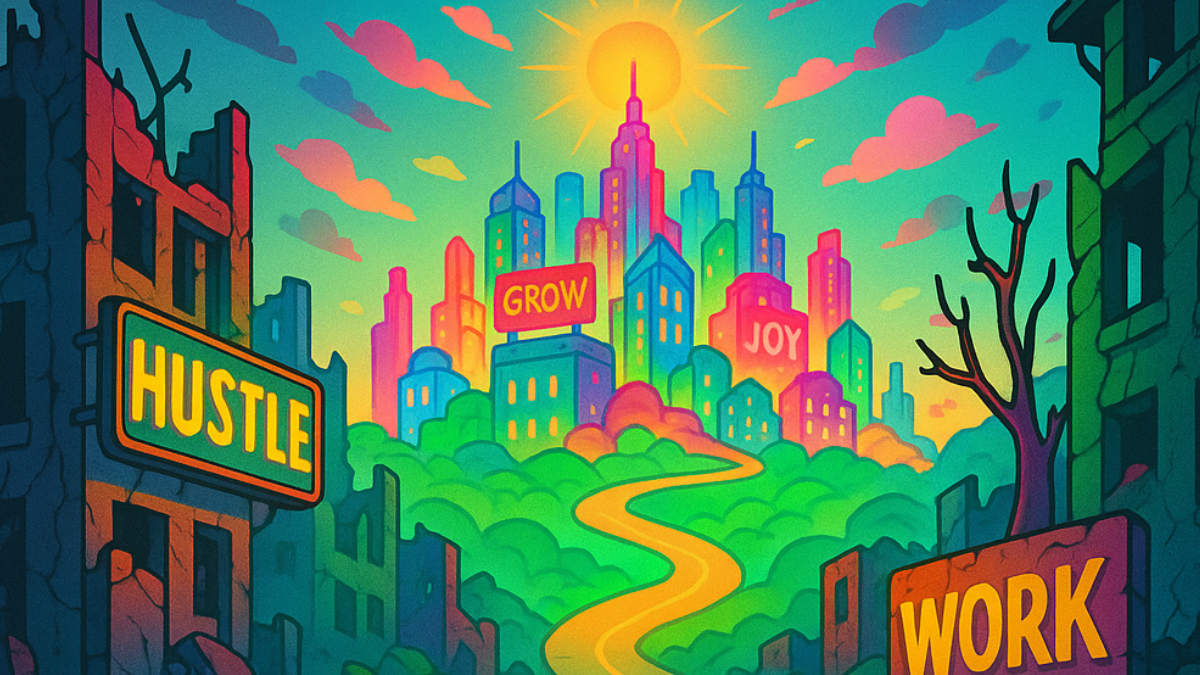
The future that we have all been waiting for is here and there’s a lot going on!! If it wasn’t clear to you before, it should be clear now that the world most of us were trained for no longer exists. The rules of life, work, relationships, and stability have quietly changed, then loudly collapsed, then rearranged themselves again. People can feel the shift in their bodies and their bank accounts. There is a low hum of collective frustration about technology, politics, the economy, the environment, and the way we’re expected to keep showing up like nothing is happening. Something is off. Most people sense it. Few have been given language, tools, or permission to respond to it differently.
Future readiness is not about predicting the next big trend or mastering every new tool or a journey to a magical high-tech universe (though, I love that idea). It is about waking up to reality, recalibrating how you think about success and security, and choosing how you want to participate in shaping what’s next. You can drift into the future by default, reacting to every new disruption as it hits. Or you can build a personal stance toward change: what you are willing to adapt, what you refuse to sacrifice, and what kind of life you are actively designing in a world that keeps shifting its terrain.
The same is true for organizations. The old, unspoken contract of loyalty has cracked. Technology has reshaped roles, burned out teams, and made some work obsolete while creating new forms of invisible labor. Funding is tightening in social sectors. Employees are carrying heavier workloads with fewer resources. Large institutions struggle to pivot under the weight of their own systems. Smaller organizations, incubators, social enterprises, and forward-thinking teams have a rare window to be more nimble, more human, and more imaginative. The question is not whether change is coming. The question is whether you are intentionally preparing for it or simply bracing for impact.
Future readiness doesn’t come from chasing trends or copying whatever is new and shiny. It comes from building internal capacity to adapt, make decisions in uncertainty, and design systems that can flex as conditions change. Whether you’re an individual navigating modern life or a small organization navigating shifting social and economic realities, there are recognizable signals that show when you’re building toward what’s next instead of clinging to what’s fading. Those signals are outlined below.
Future-Readiness Signals for People
A future-ready individual is actively building:
Adaptive mindset: The ability to learn, unlearn, and re-learn as the world changes.
Internal definition of success: Clear personal values and goals that are not dictated by outdated cultural scripts.
Decision-making confidence: Comfort making choices without perfect information or external validation.
Change literacy: Understanding how social, economic, and technological shifts impact daily life and work.
Transferable skills: Skills that travel across industries and roles: critical thinking, communication, creative problem-solving, digital fluency.
Boundaries with systems: The ability to participate in systems without letting them define identity or worth.
Resilience without burnout: Practices that support sustainability, not just endurance.
Small-scale experimentation: Willingness to test new ways of working, creating, or living without needing everything to be figured out first.
Future agency: A sense of responsibility for shaping one’s own path instead of waiting for permission or rescue.
Future-Readiness Signals for Small Organizations & Forward-Thinking Teams
A future-ready organization is intentionally building:
Clarity of purpose: A mission that guides decisions, not just branding language.
Human-centered systems: Policies and workflows that support people, not just productivity.
Learning culture: Ongoing investment in skill-building, reflection, and adaptation.
Flexible structures: The ability to shift roles, processes, and priorities as conditions change.
Thoughtful use of technology: Tools chosen to enhance human work, not replace care, clarity, or connection.
Capacity awareness: Honest recognition of limits, resources, and burnout risk.
Experimentation mindset: Permission to pilot, test, and iterate instead of clinging to legacy models.
Feedback loops: Systems for listening to staff, participants, or communities and adjusting accordingly.
Future-oriented strategy: Planning that accounts for social, economic, and workforce shifts, not just next quarter’s deliverables.
Field leadership posture: A willingness to model new approaches rather than waiting for permission from larger institutions.
Future readiness is not a single workshop, tool, or trend. It is a way of seeing the moment we are in and choosing to respond with awareness, imagination, and integrity. My work lives at the intersection of personal, economic and societal well-being because future readiness is not just a technical problem. It is a human one. If you want to shape what’s next instead of inheriting what’s broken, that work starts now, with how you think, how you design, and how you decide to show up. Download the Are You Future Ready? (Individuals) or Are You Future Ready? (Organizations) to perform a self-check on your own future readiness.
Curious about the story behind the story? Check out my Substack, Hustle Rewritten, where I share personal insights and commentary on the many ways that we can rewrite the rules to how we show up in life, career and business. Explore the world of Sassy | Chic | Geek, check out our content here on Substack, on YouTube for our Prelude to Intelligent Rebellion series and Pinterest. We occasionally post on IG , Facebook and Threads.